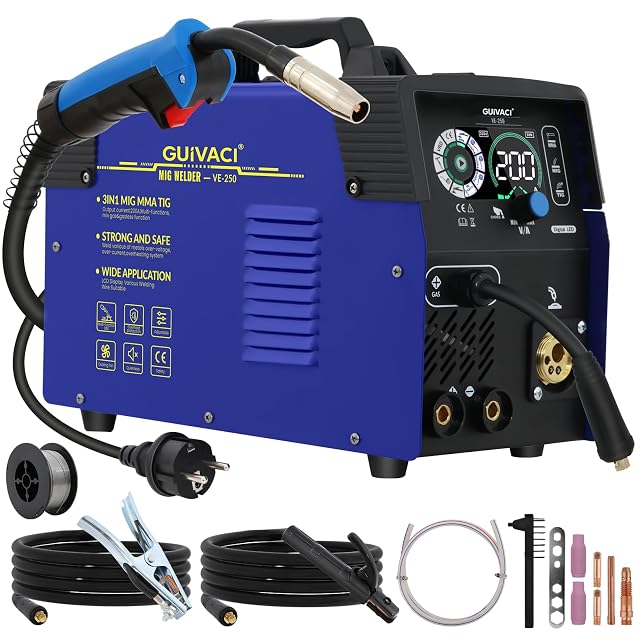
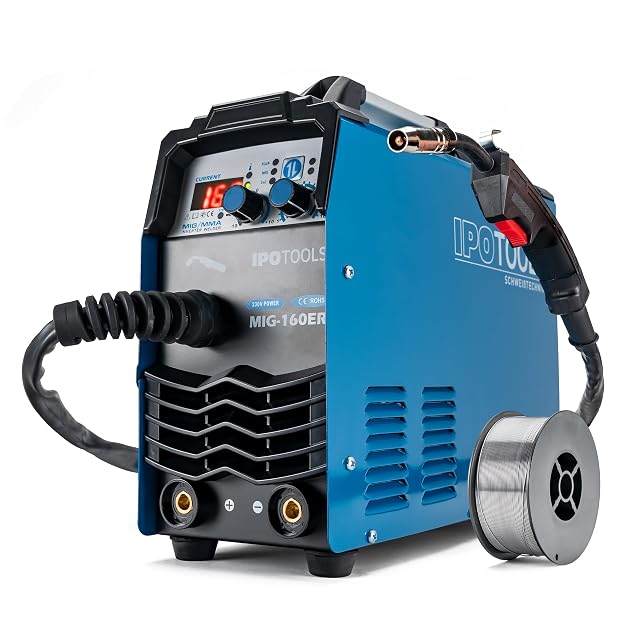
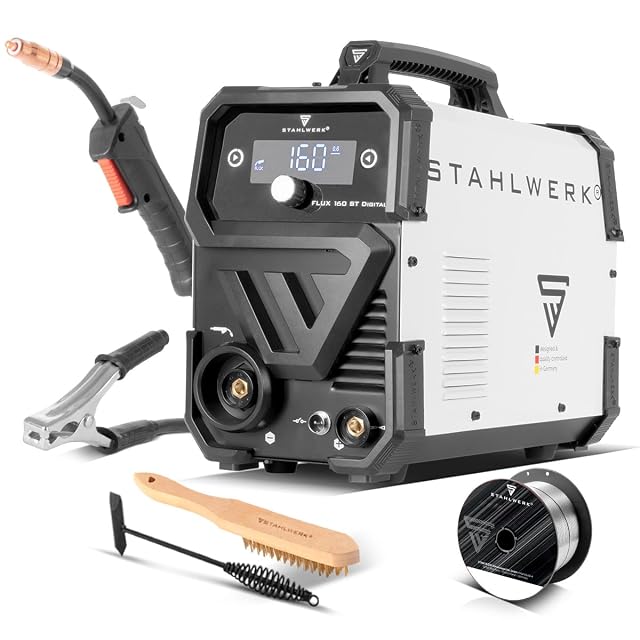
The bottom line You are buying the feed motor, the Euro connector and a European spares chain — not the amperage.
The Smartmig 162 is the machine people buy after they have owned a cheap one. It is a trolley-mounted, 230 V single-phase MIG with a maximum output of 160 A — the same headline figure as inverters costing half as much — and the argument for it is entirely about the parts you touch.
The Euro connector is the point
The torch is detachable and uses the Euro central connector, the European standard. That means the torch, the liner inside it, the contact tips, the gas nozzle and the diffuser are commodity parts, sold by a dozen suppliers, in every country the machine is sold in. Cheaper machines frequently use a fixed torch or a proprietary fitting, and when the importer stops carrying that model, the consumables become a search rather than a purchase. This is not a performance argument; it is a lifespan argument.
Feed quality over current
A 40 W feed motor is a substantial one for a machine of this size, and constant feed speed is what stops the arc from surging as the wire drags through the liner. Most « the machine keeps sticking » complaints are feed problems: a worn tip, a tired liner, a roller set to the wrong groove or a motor that cannot hold speed under load. Spending on the feed side is the least visible and most useful money in this category.
What it is not
It is not an inverter. It is heavier and larger than the 160 A inverters it competes with, and it has no synergic control, no pulse and no digital display. If you want a machine to carry to a job, this is the wrong shape; if you want one that sits in a corner of the workshop on its own wheels, the weight is irrelevant.
The listing covers steel, stainless and aluminium sheet. Steel and stainless are the honest part. Aluminium through a standard torch and liner is possible on any MIG and comfortable on very few — the wire is soft enough to buckle behind the rollers, which is why spool guns exist.
Sources
Current, supply, connector type, feed motor power, spool sizes and dimensions come from the manufacturer’s published specification. The product reference is verified on all six markets on the EAN.
What we like, and what we don't
Strengths
Euro central connector: torches, liners and tips are standard parts you can buy anywhere
Takes 200 mm spools, which cost far less per kilo than the 100 mm ones
Sold on all six markets under one reference, and GYS support exists in Europe
Compromises
Costs roughly double the 160 A inverters, for the same headline current
Transformer-based and heavy compared with an inverter of the same output
Steel, stainless and aluminium sheet are listed as suitable, but aluminium still wants a spool gun
Specifications
Maximum current
160 A
Supply
230 V single phase, 16 A
Torch connection
Euro central connector — torch is detachable
Wire feed motor
40 W, constant feed speed
Spool sizes
Ø 100 and Ø 200 mm
Dimensions
540 × 330 × 470 mm (l × w × h)
Amazon reference
B0072CIQYQ (identical on all six markets)
EAN
3154020033160
Questions people actually ask
Why pay double for the same 160 amps?
For the feed and the fittings. A 40 W feed motor pushing wire through a Euro connector is the part that decides whether an arc stutters, and the Euro standard means every torch, liner and contact tip on the market fits. The cheap inverters use proprietary torches whose spares disappear when the importer changes model — that is the cost you are avoiding, and it only shows up in year three.
Can it take a 5 kg wire spool?
Yes. It is built for both Ø 100 and Ø 200 mm spools, and the larger size is the one worth using: the price per kilogram of wire falls sharply, and you change spools a quarter as often. Small spools make sense only for aluminium or for a wire you use rarely enough that it would rust before it ran out.